When I was very young and first heard about the Petrified Forest I assumed the forest had been turned into stone because it had looked somehow into the eyes of the Medusa. I had been given a children’s picture book version of Ovid’s Metamorphosis in German ( both my Parents emigrated from Germany to the US and spoke German to one another at home in Los Angeles) and I remember thinking that The Medusa’s gaze not only turned men into stone but anything male, and in German ‘Der Wald’ was most definitely male. To make matters even more complicated I conflated the double meaning of the word ‘petrified’ so that I assumed this forest that had been turned to stone was also scared, mortified and in someway astonished at the fact. If you are petrified, you are extremely frightened, perhaps so frightened that you cannot think or move. Fear then became an attribute of stone. This whole complex misunderstanding evolved into a kind of world-view where inanimate objects started to acquire a fear of death. Not just objects but complex structures made up of inanimate objects, like cars and roads and buildings. Suddenly in my mind’s eye I saw the whole city, Los Angeles, as embodying a type of Thanatophobia. This was validated by the ‘Film Noir’ movies playing on television every day depicting an urbanism that was at once malicious and afraid. Archie Mayo’s 1936 Noir classic starring Leslie Howard, Bette Davis and Humphrey Bogart entitled ‘The Petrified Forest’ was most probably one of these movies that I watched when I got home from school in the afternoon in the Hollywood hills. But I can’t be sure. For me Los Angeles was at its most ‘petrified’ at dusk or dawn, the penumbra on the edges of day and night. Later, in my teens, I became an Ombraphile, obsessed with any object that blocked the sun and revealed a complex shadow.
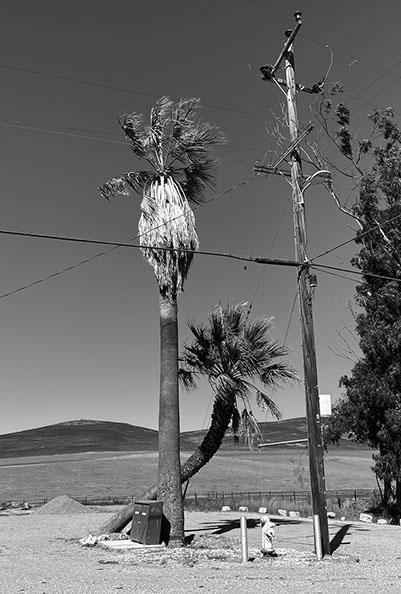
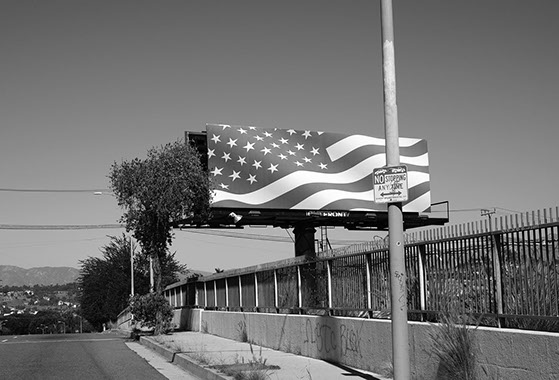
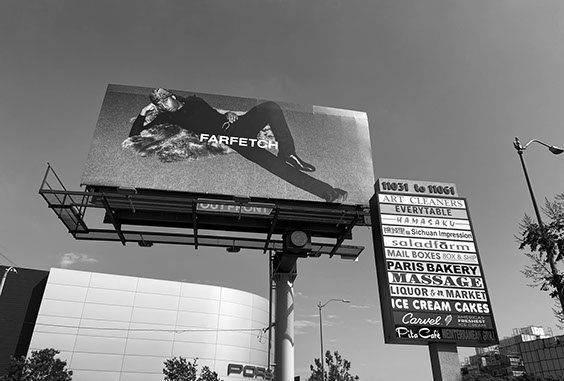
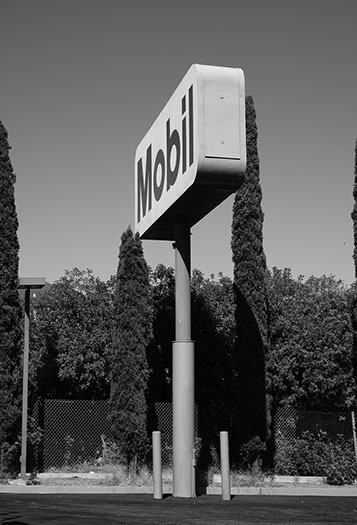
In reality the process of petrification or fossilization is extremely fickle and complex. A tree must be uprooted by some natural catastrophic event and buried in mud or silt for millennia such that it is completely transitioned to stone by Permineralization. All the organic materials have been replaced with minerals (mostly a silicate, such as quartz), while retaining the original structure of the stem tissue. A type of Replacement in which an organic material (cellulose) is replaced over an extended period of time by an in-organic crystallized structure that mimics the original. The Petrified object becomes a geothermal Relic: the three-dimensional sculptural representation of the organic original. For me this is a perfect analogy for an urbanism in which elements in the city are replaced by other newer ones but maintain the relics of the older structures and systems. The photos in this book document in a thousand tiny details this urban petrification process. The direction of the sun, property rights, the flow of traffic, the arbitrary decision-making of corporate capitalism, the fertility of the soil, the social class of the neighborhood, energy and lethargy all contribute to this ongoing metamorphosis. As new elements appear in the cityscape the older ones are subsumed but still dictate limits on position and orientation.
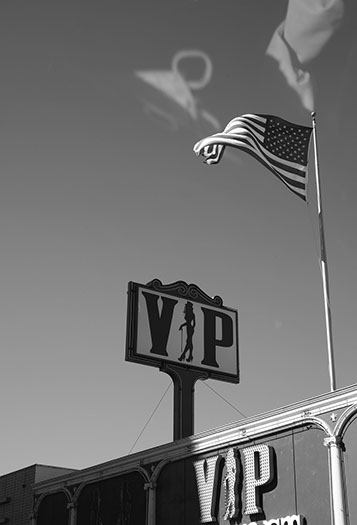
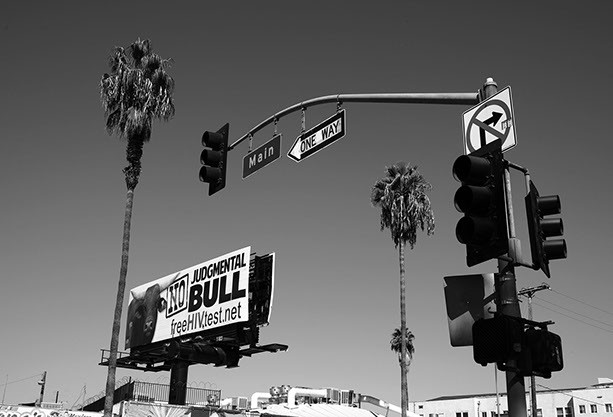
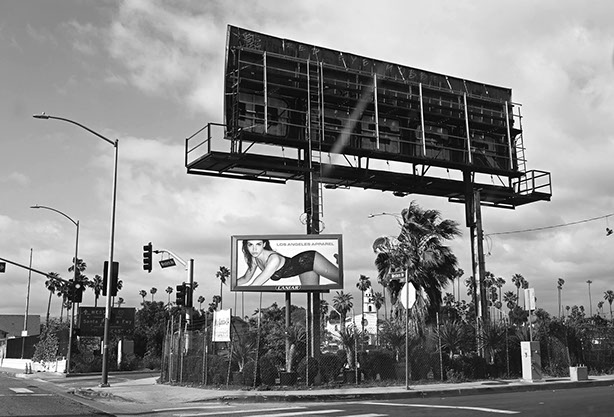
The photograph itself is a type of petrification. It creates simulacra: recognizable appearances, which freeze and preserve particular states of being, capturing the city’s movements and appearances and making them timeless. Like the petrifaction enacted by the gaze of Medusa photography is the most prolific creator of ‘visual’ statuary. The photograph becomes the relic, eliciting an interplay between self-sustaining and self-effacing, between the tension of the verbal and visual spheres of representation, between the mimetic and the enigmatic, life and death, presence and absence. These Photographs of Los Angeles all taken in 2023 mark the 65th anniversary of my struggle to comprehend this city. The Medusa gains in shape through the powers of suggestion while her appearance remains essentially elusive.
GLEN RUBSAMEN, 2023